
The brain behind global trade
Classify.
Calculate.
Prove.
Every SKU mapped to its tariff code, its duty rate, and the official schedule it came from. 928,552 national tariff lines, every one sourced.
The store 01
See your whole store, classified.
Paste a store URL. Harmonova returns the tariff code, the duty rate, and the official schedule behind each one.
Customs software still runs like it’s 1989
Every line, source verified
Every line hands back a receipt to the official government schedule it came from. source on every line.
928,552 national tariff lines. 149 national schedules. Full global coverage.
The problem 02
Global trade runs on one code. Most tools still get it wrong.
Classification is where the money leaks. Every number below traces to a primary authority or a named report.

The scale
$34.65T
Global trade in goods and services in 2025. Every shipment of goods needs an HS code, and that code sets the duty.
WTO · World Trade Statistics 2025The scope
98%
of world merchandise trade moves on HS codes. One nomenclature, maintained by the WCO, used by 200+ countries.
World Customs OrganizationThe leak
10-digit
200+ countries share the first six digits. Duty is set at the full 10-digit national line. Stop at six and you pay the wrong rate.
World Customs OrganizationThe penalty
4×
US Customs can charge up to four times the duty for gross-negligent classification, and the full value of the goods for fraud.
19 U.S.C. § 1592The friction
94%
of cross-border businesses surveyed hit shipping delays from incorrect classification or documentation.
Avalara · Cross-Border Ecommerce 2023/24The complexity
73%
of product categories now fall into tariff-sensitive classifications after the 2025 tariff changes.
ePost Global, 2025 · 15.6M shipmentsThe cost
€2B
One EU case. Customs declaration error is not a rounding error - it is duty leakage at scale.
OLAF · EU Court of Justice, C-213/19Why not just AI
A language model pattern-matches. Harmonova can only return a code that exists in the tariff schedule, and every rate carries the official source and revision it was parsed from.
The legacy problem 03
Customs is stuck in 1989. Your margin pays for it.
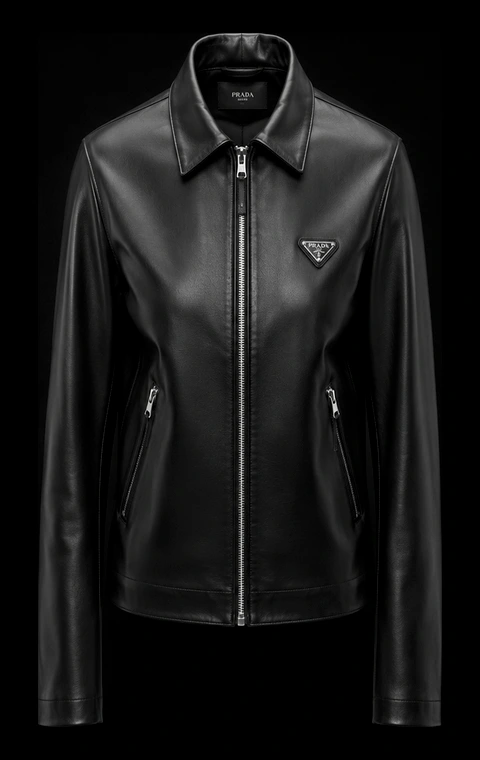
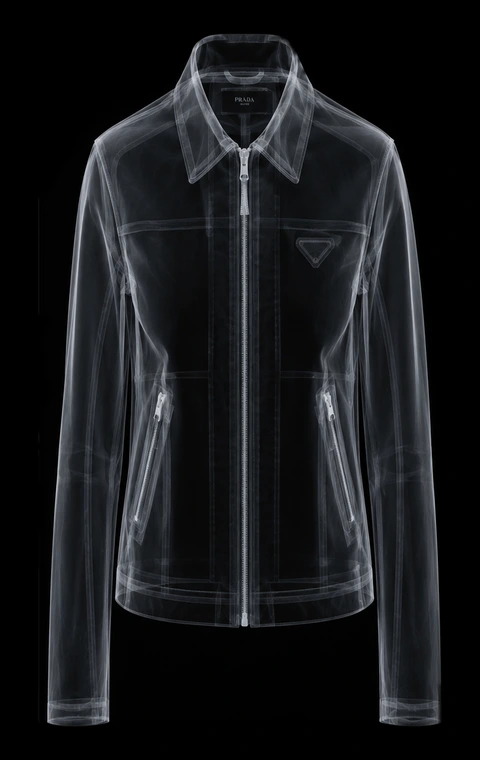
The capabilities 04
The customs engine, drawn to spec.
928,552 national tariff lines across 149 national schedules. The complete WCO nomenclature everywhere else. Every number traceable to its source.
Straight from the authority
Rates for the seven verified markets come only from the authority that publishes them: USITC, EU TARIC, UK Trade Tariff, CBSA, NZ Customs, ABF, MOF. Beyond those, applied rates are mirrored from World Bank WITS and labelled as such. 100% of rows carry a source key.
Classification that cannot invent
Product description to HS-6 and full HTS-10, with a confidence score. The classifier can only return a code that exists in the database.
Origin-aware duty stack
Section 301, Section 232, IEEPA, free trade agreements. The right stack for the right origin, effective dated.
Auditable to the revision
Every line records the official schedule and the revision it was parsed from, so a superseded measure is identifiable.
Self-verifying engine
Independent reconciliation against USITC, plus a reference-basket gate that catches drift before you do.
Open + API-native
One database, one REST API. A single endpoint classifies, resolves duty, and returns a source for every number.
Under the hood 07
A real database, with a guarded model on top.
Harmonova is not an AI guessing at tariffs. The rates are a database - parsed from the schedules governments publish, versioned, receipt on every line. A model proposes the classification; a deterministic guard chain corrects it, labels it, and shows its work.
A database, not a guess
928,552 national tariff lines parsed from the official schedules, versioned, with a source on every line. The rates were never generated - they were published, and we can show you where.
Official sources only
USITC, EU TARIC bulk exports with the publisher's own PGP signature verified on every file, the UK Trade Tariff, and national customs authorities for our seven verified markets. Everywhere else the applied rate is mirrored from World Bank WITS and flagged as a mirror, never presented as that market's law. No bought lists.
Self-verifying
Quality gates freeze a source when its data drifts on sync. Trade remedies are verified against the Federal Register, quoted verbatim. A rate that cannot be proven is served as a floor, never a guess.
Fail-closed by doctrine
A frozen source stops writing. An unproven duty rounds up, never down. A classification the engine doubts is flagged in your face, not smoothed over. Kill switches on every paid path.
Source
The official schedules, read from the authorities that publish them. Every line lands with its source, revision and parse date - the receipt exists before the rate does.
Verify
Change-rate and drift gates score every sync; a source that moves suspiciously is frozen and paged, not trusted. 70 US trade-remedy orders live, each linked to its Federal Register document number.
Classify
A model proposes. A deterministic guard chain corrects: facts stated on the listing beat the model's guess, ties fall to the higher-duty line, and confidence is earned per row - then labelled as model output, always.
Price
Landed duty to the national line, including the 3,456 formula duties simple tools skip - per hectolitre, per 100 kg, composite - plus screening against 36,817 denied parties on seven sanctions lists.
Built on a best-in-class stack
The doctrine is fail-closed. A source that drifts is frozen, not trusted. A duty we cannot prove is a floor, never a guess. A classification the engine doubts is flagged, never smoothed over. And the model never files anything: it proposes, the record shows why, and you decide.
The data engine 05
Every duty. Every market. Traced to source.
Every rate comes from the government that set it, and carries the schedule it was parsed from. 928,552 national tariff lines across 149 national schedules. The complete Harmonized System behind 200+ countries.
 United States
 Canada
 New Zealand
 Australia
 Japan
Japan European Union
 United Kingdom
Sample of stored duty lines with their official source: US 6109.10.00 16.5%, source usitc-hts; CA 6109.10.00.00 18%, source ca-cbsa; EU 6109100010 12%, source eu-taric; GB 6109100010 12%, source uk-tariff; JP 6109.10.010 10.9%, source jp-customs; NZ 6109.10.00 10.0%, source nz-customs; AU 6109.10.00 5%, source au-abf; US 6204.11.00.00 14%, source usitc-hts; CA 6204.11.00.00 18%, source ca-cbsa; EU 6204120010 12%, source eu-taric; JP 6203.11.100 16%, source jp-customs; GB 6203191000 12%, source uk-tariff; US 4202.12.21 20%, source usitc-hts; AU 6402.12.00 Free, source au-abf.
Sources: USITC · TAXUD · HMRC · MOF JP · CBSA · NZ Customs · ABF
Why it's different 06
A database, not a guess.
Harmonova is a real customs database. 928,552 national tariff lines across 149 national schedules, plus the complete Harmonized System that 200+ trading economies classify against. Every line carries the official schedule it was parsed from. AI does one job here: plain-language lookup. The answer comes from the data, not a model's memory.
928,552 national tariff lines
928,552 national tariff lines across 149 national schedules. Not fuzzy memory, not a scrape, not an average.
A receipt on every line
Each line records the official schedule and revision it was parsed from. Rates come only from the authority for that market.
AI that cannot invent a code
Plain-language search over verified customs data. The classifier can only return a code that exists in the database.
TRY ITFabric x-ray · classification scanner 07
A 2% difference in fabric.
3× the duty bill.
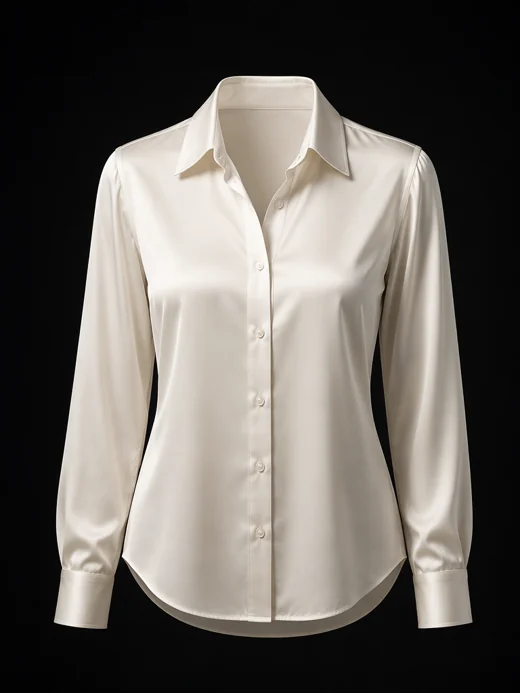
US customs taxes a blend by whichever fibre weighs the most. Drag across the 50% line: the HS heading changes, and the duty rate triples behind it.
Classify. Calculate. Prove.
Get started 08
From any SKU to landed duty in seconds, across 928,552 national tariff lines. Every rate carries the official schedule it came from.